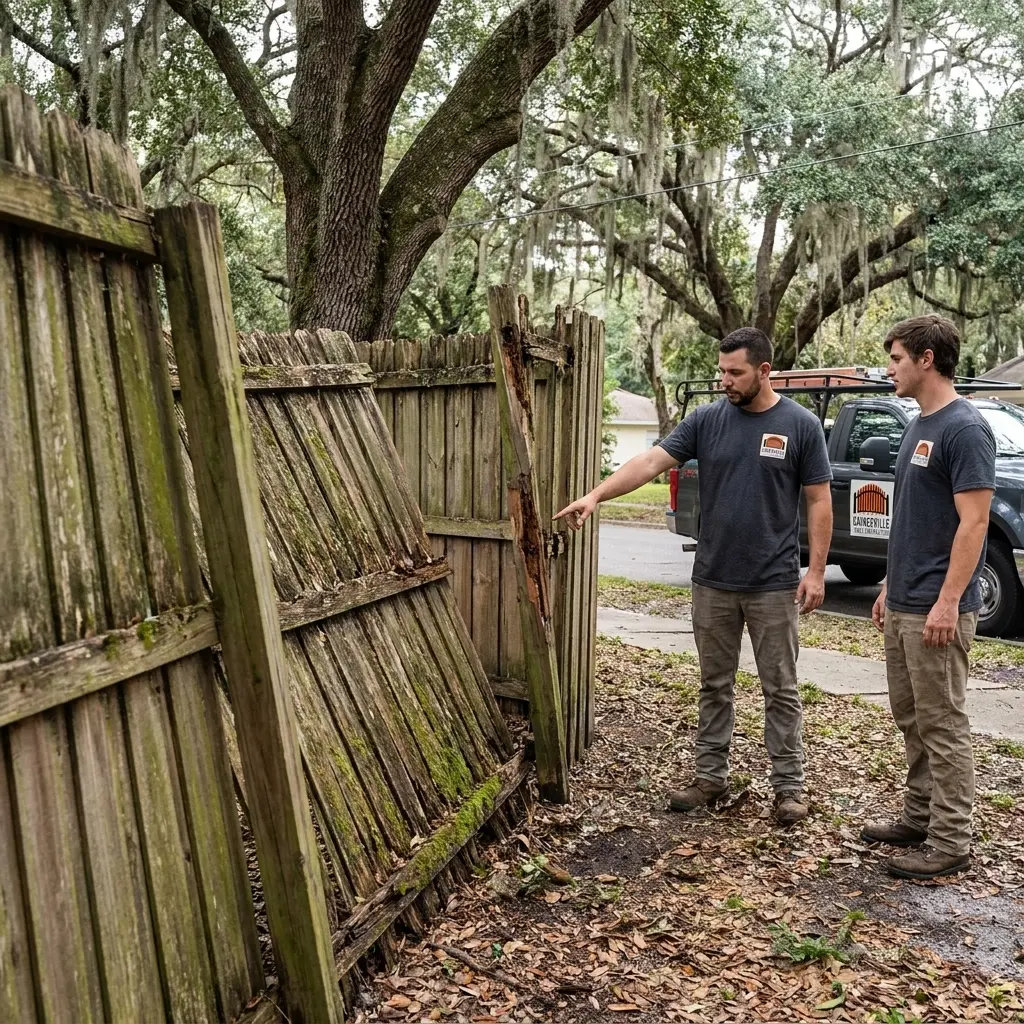
Realistic Lifespan for a Florida Wood Fence
A well-built, well-maintained pressure-treated pine or cedar fence in our climate typically lasts somewhere in the range of 15 to 20 years before it needs full replacement, though individual boards and gates often need attention well before that. Compare that to vinyl, which commonly runs 20 to 30-plus years with essentially no maintenance, or aluminum, which can last 20-plus years and rarely needs anything beyond an occasional rinse. Wood costs less upfront, but it demands ongoing care to get anywhere close to that upper lifespan range.
Why Florida Is Tougher on Wood Fencing
Alachua County's combination of high humidity, frequent summer rain, and intense UV exposure accelerates the two things that end a wood fence early: rot and sun damage. Moisture that doesn't fully dry between rain events promotes fungal growth and softens wood fibers over time, especially near ground contact where posts meet soil. UV exposure dries out and breaks down the wood's surface, which is what causes graying, splintering, and eventually cracking if the fence isn't resealed.
That's why we recommend resealing or restaining a wood fence every 1 to 2 years in this climate — it's the single biggest factor in whether a fence looks good and holds up structurally past the 10-year mark, or starts failing early.
Pine vs. Cedar: Does Species Matter?
Pressure-treated southern yellow pine is chemically treated to resist rot and termites, which is why it's the standard, budget-friendly choice across our service area. Cedar has natural oils that provide some rot and insect resistance without chemical treatment, and many homeowners feel it ages more gracefully. In practice, both can reach a similar overall lifespan here — maintenance matters more than which species you choose. See our full breakdown in Wood vs. Vinyl Fencing for Gainesville Homes.
Wood picket and privacy fencing tends to be especially popular in towns with a historic character to protect, like Micanopy and High Springs, where a natural wood look fits the neighborhood better than vinyl or aluminum.
PAA: Wood Fence Lifespan Questions
Does cedar last longer than pressure-treated pine in Florida?
Cedar has natural oils that resist rot and insects without chemical treatment, and many homeowners find it holds its look a bit longer between refinishing. Properly maintained, both materials can reach a similar overall lifespan in our climate — the bigger factor is maintenance, not just species.
How can I make my wood fence last longer?
Reseal or restain every 1 to 2 years, keep sprinklers from hitting the fence directly, trim back landscaping that traps moisture against the boards, and address small issues like a loose picket or cracked post cap before they spread.
When should I replace vs. repair an aging wood fence?
If the posts are still solid and only individual boards or a section are damaged, repair is usually the more cost-effective option. Once multiple posts are rotted at the base or leaning, a full replacement is typically more practical than patching around failing structural posts.
Not Sure If Yours Needs Repair or Replacement?
We'll give you an honest read on whether your existing fence is worth saving. Request your free estimate or call us at (352) 763-3520.
Also see: Fence Repair & Replacement and How Deep Should Fence Posts Be Set in Florida?